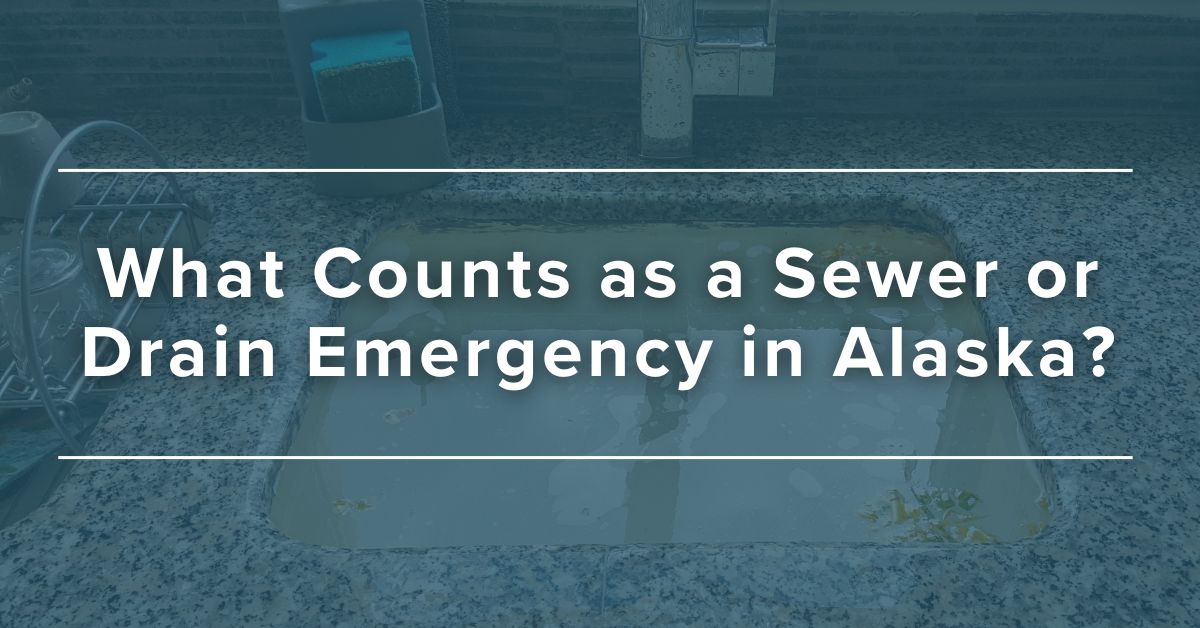
When sewer or drain problems happen in Alaska, they tend to escalate fast. Freezing temperatures, long service lines, and ground conditions across the state mean issues that might start small can quickly turn into serious emergencies.
AK Sewer & Drain has spent decades responding to these situations across Alaska, and one thing is consistent: knowing when to act immediately can prevent extensive damage and unsafe conditions inside your home or business.
Here’s a clear breakdown of what truly counts as a sewer or drain emergency.
When a Sewer or Drain Issue Becomes an Emergency
- A sewer or drain problem becomes an emergency when it:
- Causes wastewater to back up into your home
- Prevents drains from functioning entirely
- Creates health or safety concerns
- Risks frozen or damaged sewer lines
If wastewater has nowhere to go or is coming back into your space, it’s no longer a routine service call.
Common Sewer and Drain Emergencies Across Alaska
Sewer Backups Inside the Home
Sewer backups are one of the most serious emergencies homeowners face. When wastewater comes up through toilets, floor drains, tubs, or sinks, it introduces harmful bacteria and creates unsafe living conditions.
Multiple fixtures backing up at once or sewage odors inside the home often point to a main line blockage or failure that requires immediate professional attention.
– Frozen Sewer or Drain Lines
Frozen sewer and drain lines are a frequent issue during Alaska winters. When lines freeze, wastewater can no longer flow properly, leading to backups and potential pipe damage once thawing begins.
Frozen sewer lines are especially common in properties with long runs, shallow lines, or older systems. Addressing the problem early can help prevent cracked lines and costly excavation.
– Complete Drain Blockages
A slow drain can usually wait. A drain that stops working entirely cannot.
If water won’t drain from sinks, tubs, or floor drains, or if multiple drains are affected at the same time, it’s often a sign of a larger blockage deeper in the system. Left untreated, full blockages frequently lead to sewer backups.
– Overflowing Toilets Linked to Sewer Issues
When a toilet overflows repeatedly and plunging doesn’t resolve the issue, the problem is often in the sewer line, not the fixture itself.
This kind of overflow can quickly spread contaminated water beyond the bathroom and should be treated as an emergency drain issue.
– Persistent Sewer Odors
Strong sewer smells inside or around your property are not normal. Odors can signal a blockage, broken line, or ventilation issue that allows sewer gases to escape.
Beyond being unpleasant, sewer gas can pose health risks and should be addressed promptly.
– Collapsed or Damaged Sewer Lines
In some cases, sewer emergencies are caused by collapsed, cracked, or shifted lines. Ground movement, freezing and thawing, and aging infrastructure can all contribute to structural sewer failures.
Signs may include recurring backups, unexplained wet areas in the yard, or repeated drain issues that never fully resolve.
Why Fast Response Matters in Alaska
Sewer and drain emergencies don’t improve on their own, especially in Alaska’s climate. Delaying service often leads to:
- Worsening backups and property damage
- Increased repair complexity and cost
- Frozen lines becoming cracked or collapsed
- Unsafe conditions inside the home
Knowing where your cleanout is located and calling for help early can significantly limit damage.
When a Sewer or Drain Issue Can Wait
Some issues may not require emergency service, including:
- A single slow drain
- Minor buildup that still allows water to flow
- Occasional odors that resolve quickly
If you’re unsure whether your situation is urgent, it’s always better to ask before things get worse.
If wastewater is backing up, drains are completely blocked, or lines are frozen, it’s a sewer or drain emergency. Alaska’s conditions leave little margin for delay, and experienced response can make all the difference. Contact us today if you have additional questions – our team is happy to help!